
How Pilates Enthusiasts Combine Studio and Home Training
Practical guidance for studio-trained Pilates practitioners who want to extend progress with focused home sessions. Learn equipment choices, hybrid weekly schedules, and how to reinforce studio instruction at home.
Jun 23, 2026
·
7 min read
-Feb_25-108.jpg&w=3840&q=75)
IN THIS ARTICLE
KEY TAKEAWAYS
- Combine studio instruction with targeted home sessions to increase training frequency and accelerate progress.
- Choose a home reformer or mat setup based on build quality, spring range, carriage glide, and space.
- Short, guided home sessions (2–3× weekly) reinforce technique and compound results better than sporadic long workouts.
- Use instructor-led digital programming to replicate studio cueing and stay accountable between classes.
Studio Pilates earns its reputation for driving results with you feeling great while doing it. The instruction is hands-on, the equipment is commercial-grade, and the environment pushes you to show up consistently. If you’ve found a studio you like, that investment is worth protecting. The real challenge most practitioners face is not starting Pilates. It’s staying consistent ‘ when the studio schedule does not cooperate.
This guide is for people who already practice Pilates and want to build more training into their week. The goal is not to replace studio sessions. It is to be an extension of them, so the work you do in class does not sit idle for days before you return.
What Studio Pilates Does Well (And Where It Falls Short)
The studio experience offers things that are genuinely hard to replicate at home. A trained instructor sees your movement in real time, catches compensations before they become habits, and can adjust your position in ways that verbal cues alone cannot achieve. Commercial reformers and a full equipment room allow for a wider exercise range than most home setups. Booking a class and training alongside other people also provides a built-in structure that many practitioners rely on to stay accountable.
Where studios create friction is equally real. Most people can only attend once or twice a week. That frequency is enough to learn technique, but research suggests it may not be enough to drive the kind of consistent adaptation that supports steady progress. [4] Scheduling constraints, commute time, and per-class costs compound over time, and on a busy week, the studio session is often the first thing to get cut.
None of that argues against studio training. It argues for a plan that uses the studio for what it does best and fills the remaining days with structured home work.
Why Home Training Fills the Gaps Between Classes
Think of home sessions as the infrastructure that makes studio instruction stick. Class teaches and corrects. Home sessions reinforce and repeat.
Research published in the Journal of Strength and Conditioning Research found that Pilates performed twice per week over 12 weeks produced statistically significant improvements in abdominal endurance, hamstring flexibility, and upper-body muscular endurance in active middle-aged adults. [1] Two sessions per week is a realistic minimum for meaningful progress. If studio attendance is already filling one of those slots, home training fills the other.
A separate body of research on training frequency supports the same logic. Studies comparing once-per-week training against three sessions per week found significantly greater strength gains in the higher-frequency group over 11 weeks, even when total training volume was matched. [4] More frequent, shorter sessions distributed across the week consistently outperform less frequent, longer ones.
The practical case for home training builds on this. You can train when it fits your schedule, reinforce the specific movements your instructor introduced in class, and add short focused sessions that compound over weeks and months. For a practical starting point on building a home practice, see our overview of Pilates at home.
Mat Pilates vs. Reformer Pilates: What You Can Do at Home
Before committing to home equipment, it helps to understand what each format actually involves and what each can deliver on its own.
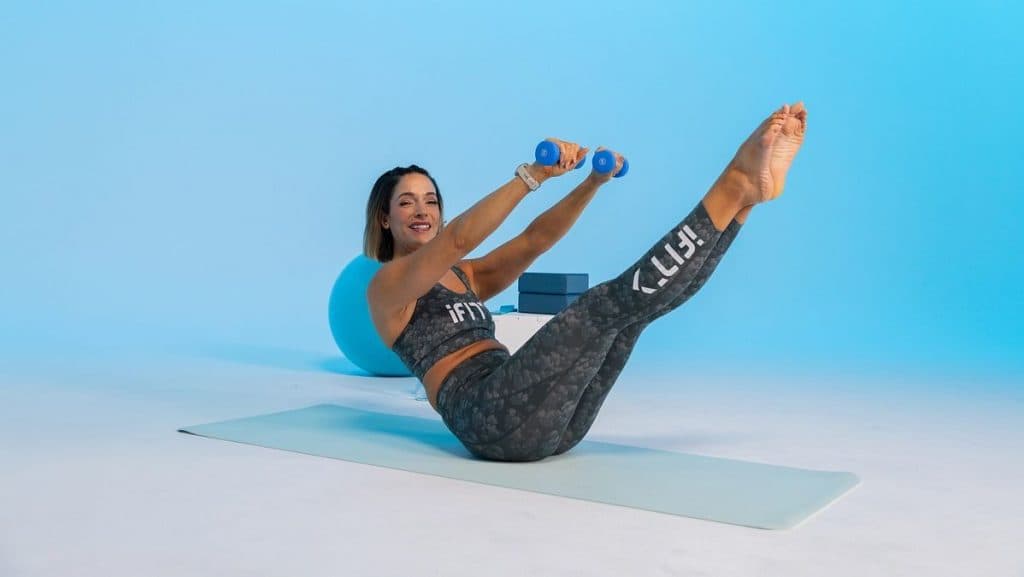
Mat Pilates uses bodyweight and gravity as resistance. The foundational work covers breath mechanics, core sequencing, spinal articulation, and mobility patterns that support functional movement across a wide range of physical activities. [6] The barrier to entry is low. A quality mat and enough floor space is all that is required, and a well-designed mat program can drive meaningful improvements in muscular endurance and flexibility. [1] For a closer look at what mat training looks like in practice, see our mat Pilates beginner guide.
Reformer Pilates adds a sliding carriage, spring resistance, and a range of attachments that change what the body is asked to do. Research measuring exercise intensity found that a typical reformer session produces higher energy expenditure, oxygen consumption, and heart rate compared to a mat session. [3] For practitioners accustomed to reformer-based studio work, a mat alone does not replicate the full scope of exercises they have learned. A home reformer bridges that gap.
For practitioners who train primarily on studio reformers, a full home reformer offers the closest continuation of that work.
How to Choose a Home Reformer for Studio-Trained Practitioners
If you are used to commercial equipment, the quality gap between studio and home machines is the most important variable to evaluate. A reformer that feels unstable, has limited spring options, or delivers inconsistent carriage movement will not replicate the experience you are trying to extend.
The features that matter most:
Spring resistance range. You want enough variety to support light, precise work on one end and heavier loading on the other. A narrow range limits exercise selection and progression over time.
Carriage movement. Smooth, consistent glide is what allows you to maintain control and alignment through a movement. Choppy or inconsistent carriage response makes technique harder to execute and harder to build on.
Footbar adjustability. Multiple positions let you access more exercises comfortably, particularly as your practice expands.
Build quality and stability. The machine should feel solid under regular use. Flex or wobble under load introduces compensation patterns that undermine the precision Pilates requires.
Space and storage. Measure your room before you buy. Check whether the reformer folds or stores vertically. A machine that stays set up is one you will actually use.
Instructor-led programming compatibility. A reformer paired with structured digital instruction is a fundamentally different experience than a reformer used alone. Guided sessions provide the cueing and progression that make home training effective rather than just active.
Two models in the NordicTrack Ultra Reformer Series are worth knowing about for studio-trained practitioners specifically.
The Ultra 1 Reform RX-S is the studio-grade option. It offers resistance up to 143 lbs through a four-spring push-button system, a traveling Limitless Footbar for seamless exercise transitions, and a screen anchored in front — a configuration that mirrors the feel of working with a commercial reformer. If you are used to the resistance range and footbar positioning of a studio machine, the RX-S is the closer match.
The Ultra 1 Reformer is the compact home model. It delivers resistance from 22 to 99 lbs through a push-button enclosed spring system, stainless steel glide tracks for a smooth and virtually silent carriage, and a 24" tilting HD touchscreen. Its smaller footprint makes it the practical choice for dedicated home spaces where a full studio-sized machine would not fit.
Both connect to iFIT instructor-led Pilates programming, so you have guided sessions to follow on the reformer from day one. For a side-by-side comparison of the two models, see our Ultra 1 Reformer vs. RX-S breakdown.
Building a Weekly Hybrid Training Schedule
A hybrid approach works best when studio sessions and home sessions serve different purposes. Studio time is for instruction, correction, and progression. Home time is for reinforcement, repetition, and building the frequency that drives results.
Below is a sample schedule to adapt to your life:
Monday: Home reformer session (30 to 45 minutes)
Tuesday: Studio class
Wednesday: Rest or light movement
Thursday: Home reformer or mat session (30 to 45 minutes)
Friday: Studio class, or a second home session if you cannot make it in
Saturday: Home mat session focused on mobility or flexibility work
Sunday: Rest
Keep home sessions shorter and focused. Picking two or three movements from your last studio session and repeating them at home is a practical way to reinforce technique without trying to recreate a full class.
Prioritize consistency over intensity. A 30-minute home session three times per week compounds significantly over months. An occasional long session that leaves you sore and reluctant to come back does not. [4]
Think in weeks, not individual sessions. Progress in Pilates is pattern-dependent. What builds results is the accumulation of regular work, not any singular workout. [4] For more on building a long-term approach to your practice, see our article on Pilates fitness goals and longevity.
What to Expect from Instructor-Led Pilates at Home
One of the most common concerns about home training is accountability. In a studio, the instructor builds the session, watches your form, and keeps the class moving. At home, without that external structure, many people find workouts drift or plateau.
Digital instructor-led programming addresses this directly. A guided class provides verbal cues, a defined sequence, and a pace to follow. That structure replicates more of the studio dynamic than solo training can. Research has found that six weeks of Pilates performed three times per week produced significant improvements in core muscle endurance and trunk proprioception in healthy adults. [5] The structure of guided programming is part of what makes that consistency achievable.
Pilates training lasting six or more weeks has also been shown to increase core muscle strength and endurance as well as joint flexibility in young, middle-aged, and older adults. [2] What well-designed digital programming delivers is the progression framework that makes those gains possible at home: on-demand sessions with focused technique cues, structured progressions that build from foundational movements toward more complex work, and instructor pacing that provides meaningfully more guidance than mirroring a silent demonstration.
iFIT Pilates programming pairs directly with NordicTrack reformers to deliver instructor-led sessions across a range of levels and goals. At launch, the library includes more than 160 reformer-based workouts and over 200 mat Pilates sessions, led by instructors including Jeni DelPozo, Ashley Paulson, and Abe Ahern. For a deeper look at how Pilates supports mobility and mental focus alongside the physical work, see our overview of those benefits.
Next Steps: Making Hybrid Training Work for You
Studio Pilates and home training are stronger together than either is alone. Use studio sessions for the instruction, correction, and community that make the practice stick. Use home sessions to build the frequency that turns isolated classes into real, compounding progress.
If you are starting at home, a quality mat and a structured program are enough to begin. If you are ready to bring reformer work into your space, the Ultra 1 Reformer is built for home environments with a compact footprint and push-button resistance, while the Ultra 1 Reform RX-S is engineered for studio-level resistance and performance. Both connect to iFIT Pilates programming so your practice has structure and progression from day one. For readers weighing whether Pilates alone meets their fitness goals, our comparison of Pilates vs. cardio covers the full picture.
The work is yours to do. The right setup and the right guidance make it easier to show up for it consistently.
FREQUENTLY ASKED QUESTIONS
References
Kloubec JA. Pilates for improvement of muscle endurance, flexibility, balance, and posture. J Strength Cond Res. 2010;24(3):661-667.
Tinoco-Fernandez M, et al. What is the exercise intensity of Pilates? An analysis of the energy expenditure, blood lactate, and intensity of apparatus and mat Pilates sessions. PubMed. 2021.
Ochi E, et al.. Higher Training Frequency Is Important for Gaining Muscular Strength Under Volume-Matched Training. Front Physiol. 2017;8:1023.
Turna B, Ozcan Kahraman B. An online pilates exercise program is effective on proprioception and core muscle endurance in a randomized controlled trial. Ir J Med Sci. 2022;191(3):1229-1236.
Kang MH, et al. Comparisons of functional movements and core muscle activity in women according to Pilates proficiency. Front Physiol. 2024;15:1435671.
Disclaimer: The primary purpose of this blog post is to inform and entertain. Nothing on the post constitutes or is intended to be a substitute for professional medical advice, prevention, diagnosis, or treatment. Reliance on any information provided on the blog is solely at your own risk. Always seek the advice of your physician or other qualified health provider with any questions you may have regarding a medical condition, and please consult your doctor or other health care provider before making any changes to your diet, sleep methods, daily activity, or fitness routine. Do not disregard professional medical advice or delay seeking it because of information available on this blog. NordicTrack assumes no responsibility for any personal injury or damage sustained by any recommendations, opinions, or advice given in this article. Always follow the safety precautions included in the owner’s manual of your fitness equipment.
RECENT ARTICLES
Fitness
Mat Pilates: The Beginner-Friendly Way to Build Core Strength
Mat Pilates builds real core strength using only your body weight and breath. Learn why this low-impact method is the ideal starting point for beginners today.
Nov 13, 2025 · 7 min read
READ MORE.jpg&w=3840&q=75)
Equipment
Ultra 1 Reformer vs RX-S for Pilates Community
Compare the Ultra 1 Reformer vs RX-S to find the configuration that supports your connected Pilates community experience, resistance preferences, and training environment.
Feb 18, 2026 · 6 min read
READ MORE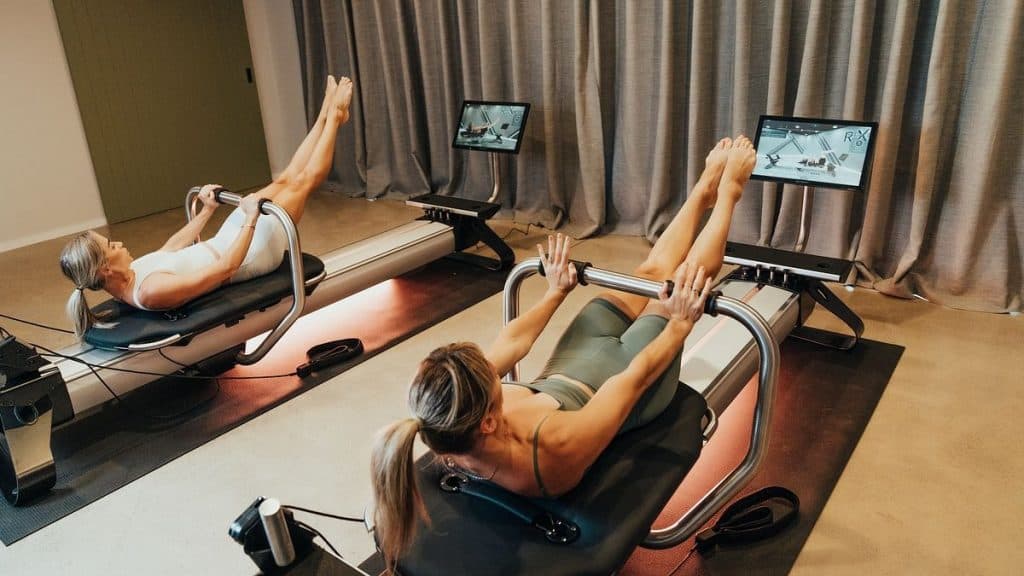
Fitness | iFIT App
Pilates for Mobility and Mental Focus
Explore how Pilates supports mobility, balance, and mental focus through controlled movement and breath. Learn what research shows and how to practice at home or on a reformer.
Jan 13, 2026 · 8 min read
READ MORE