
Pilates for Men: Building Strength Without the Bulk
Practical guide for men on using Pilates to build functional core strength, stability, and mobility without adding bulk. Understand mat vs reformer, key exercises, and performance benefits.
Jun 14, 2026
·
9 min read
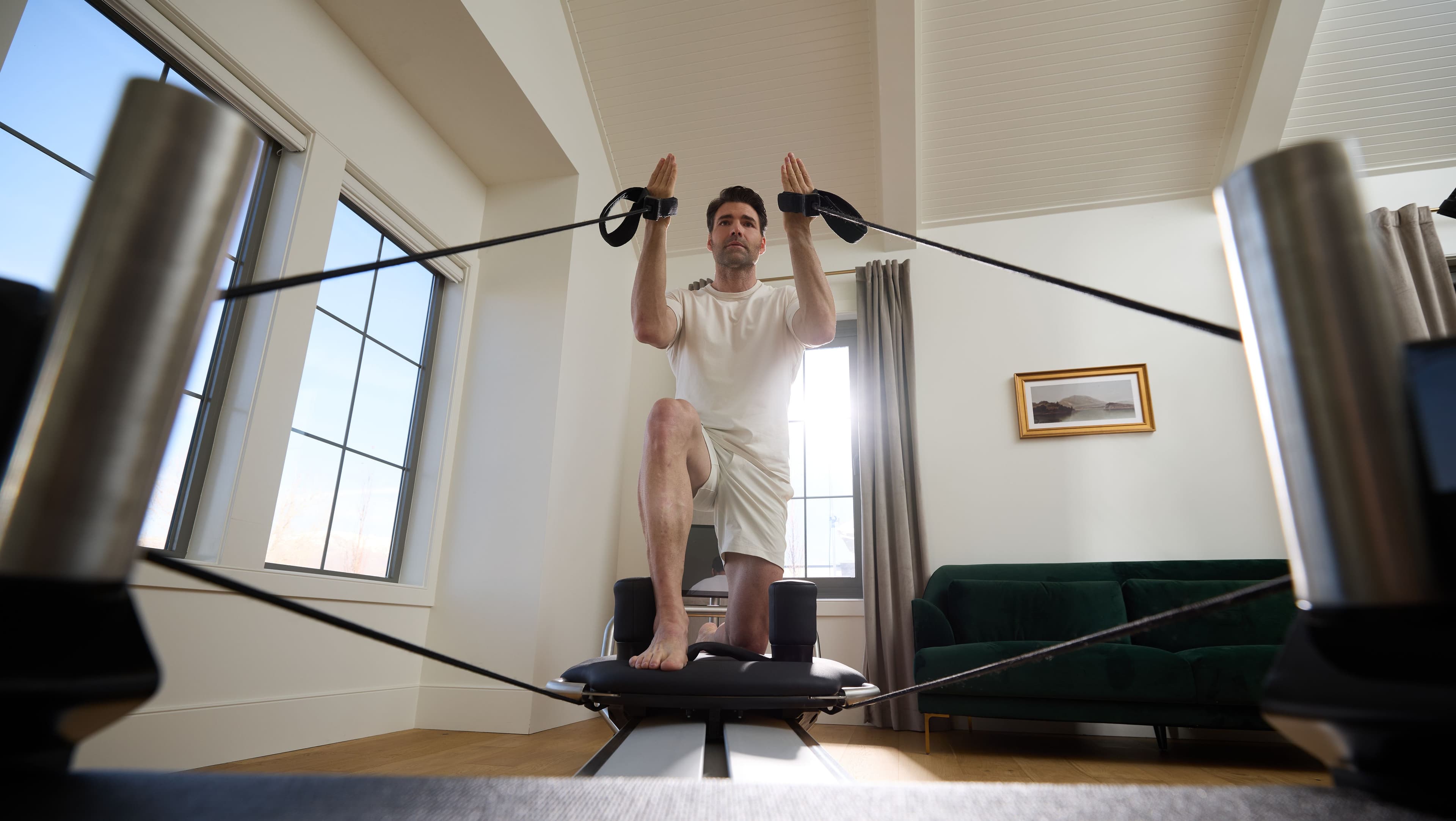
IN THIS ARTICLE
KEY TAKEAWAYS
- Pilates for men builds functional core stability and movement control that improves lifting safety and athletic performance.
- Reformer Pilates provides adjustable resistance and measurable progression for serious strength and stability gains.
- Regular mat or reformer sessions reduce injury risk, improve posture and balance, and expand joint range of motion.
- Integrate pilates for men 2–3x weekly alongside existing training to see meaningful improvements in movement quality.
Pilates has a reputation problem. Many men who train seriously write it off as too gentle, too niche, or simply not built for them. We’re here to correct that perception.
Pilates is a system of controlled, resistance-based movement that emphasizes core stability, alignment, and precise muscle engagement. Research suggests Pilates may support improvements in core strength, balance, flexibility, and overall physical function.⁸ Some of the most committed athletes in the world include Pilates-style work in their training, not for the aesthetics, but for the foundation it builds under everything else.
This guide explains what Pilates actually is, why it matters for men who train with intention, which exercises to start with, and why reformer-based work is the logical next step for serious results.
What Is Pilates, and Why Should Men Care?
Pilates centers on controlled movement and resistance, not momentum. Exercises demand precision. That makes them harder than they look.
The perception that Pilates is not for men stuck because the method became associated with studio culture. But Pilates trains the deep stabilizers most conventional gym programs skip: the transverse abdominis, multifidus, internal oblique, and shoulder stabilizers. Research confirms that experienced Pilates practitioners activate these deep core and low back muscles more effectively than non-practitioners, with measurable differences in pelvic and trunk stability.²
Those muscles rarely make your muscles look bigger. They do make you move better, lift more safely, and perform more consistently.
Pilates does not replace heavy lifting or hard cardio. It complements them. Think of it as the work that strengthens the platform your big lifts and sprint sessions sit on. Better stability and movement mechanics support the quality of your other training.
The Real Strength Benefits of Pilates for Men
Be clear-eyed about what Pilates will and will not do.
It will not produce the same hypertrophy as dedicated high-volume, heavy lifting. That is not what it is designed for. What it does develop is functional strength, control, and endurance in the stabilizer muscles that most training programs consistently underwork.
Research supports several specific outcomes men can expect from consistent Pilates practice:
Core Stability and Spinal Support.
A systematic review of randomized controlled trials found that Pilates training improves core muscle strength, particularly deep stabilizers, and is superior to no exercise for core muscle activation.¹ Experienced practitioners show markedly better trunk and pelvis stability than non-practitioners.²
Improved Posture.
A 2024 systematic review of 13 studies involving 783 participants found meaningful evidence that Pilates improves body posture, particularly through the cervical, thoracic, and lumbar spine.³ A separate 2024 meta-analysis found moderate certainty of evidence that Pilates improves both thoracic and lumbar postural alignment.⁴
Better Balance.
A systematic review and meta-analysis of RCTs found that Pilates training improves balance compared to non-active control groups, with a standardized mean difference of 0.84, a meaningful effect size.⁵
Increased Joint Range of Motion.
A 10-week Pilates training program produced statistically significant improvements across cervical spine flexion, extension, and rotation, as well as hip, knee, and glenohumeral joint ranges.⁶ Unlike traditional resistance training, Pilates exercises require simultaneous activation and coordination of several muscle groups through a controlled range of motion.⁸
Musculoskeletal Pain Reduction.
Research notes that Pilates specifically cues the transversus abdominis and multifidus, muscles recognized as key stabilizers in individuals with low back pain, and reviews of clinical studies suggest Pilates may support core stability, movement quality, and overall physical function.⁹ Clinical research has found that Pilates-based exercise programs may support overall physical function and quality of life.⁷
These are not aesthetic outcomes. They are performance outcomes, the kind that make everything else in your training work better.
Mat vs. Reformer: What Is the Difference?
Mat Pilates uses bodyweight and is an accessible entry point. It builds body awareness and baseline control. A reformer is a different tool entirely.
A reformer is a sliding carriage with adjustable spring resistance. It lets you work against calibrated tension through a full range of motion, which provides constant, adjustable load that gravity-only mat work cannot replicate. That variable resistance makes it possible to progress an exercise in measured steps, increasing the challenge as your strength and control develop.
Compared with mat work, the reformer expands the range of exercises and body positions available, provides continuous tension that increases muscle engagement throughout the movement, and makes structured progression more practical and precise.
For men who want controlled, progressive strength and stability work, reformer training is where the method gets serious.
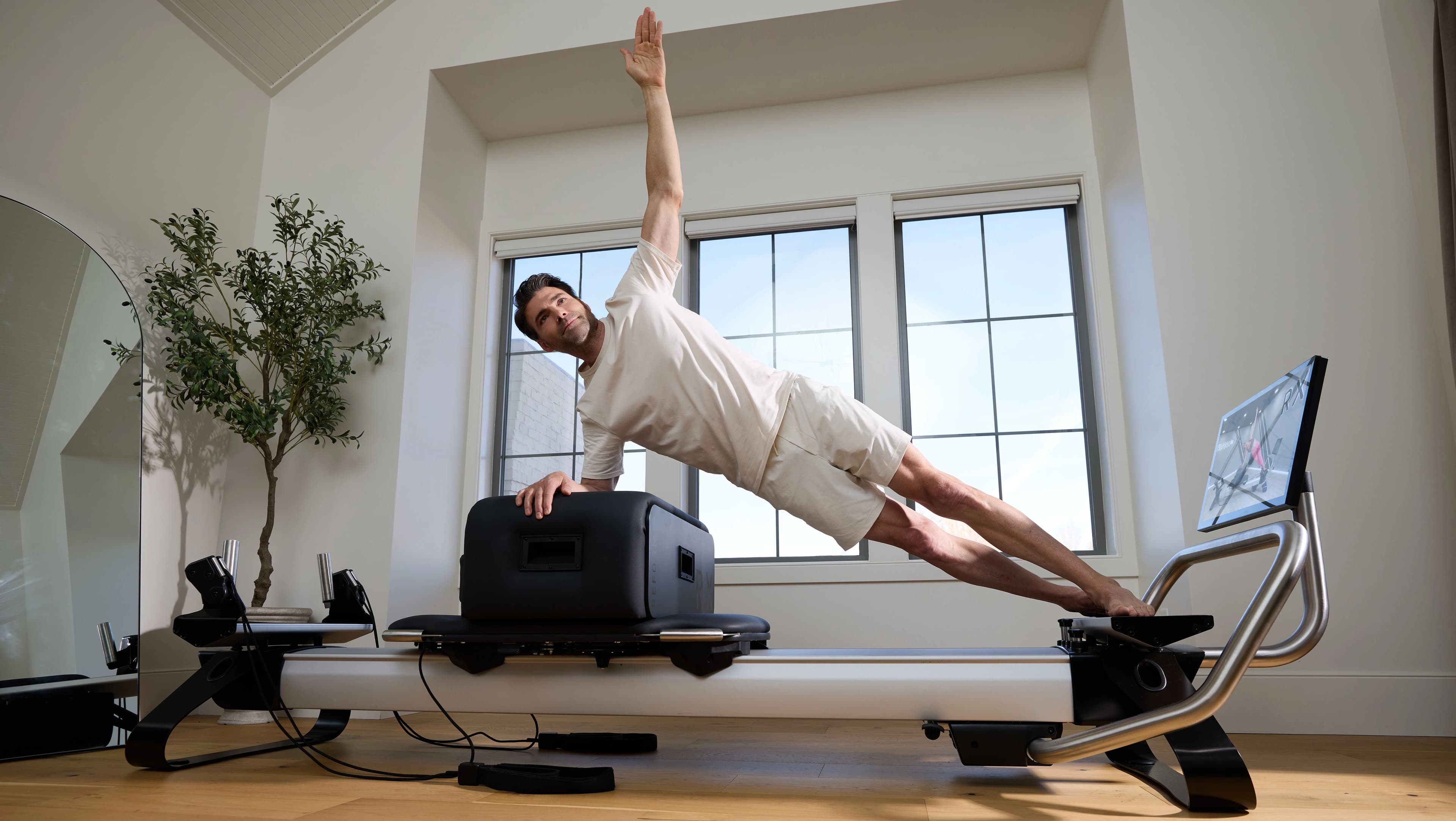
6 Pilates Exercises That Target What Men Train Most
These movements focus on the core, glutes, lower back, and shoulders, the muscle groups that matter most for lifting performance and athletic function.
Footwork on the Reformer
Targets: quads, hamstrings, glutes, calves
Press the carriage away using the footbar, then return under control. Lower-body work with minimal axial loading, reinforcing hip and knee alignment that carries over to squats and deadlifts.
The Hundred (Mat or Reformer Variation)
Targets: deep core, hip flexors, shoulder stabilizers
Hold a tabletop or extended-leg V position, extend the arms forward and pulse the arms up and down through 100 counts. The isometric hold and coordinated breathing pattern build core endurance in the positions that matter under load.
Long Stretch Series (Reformer)
Targets: core, shoulders, chest, glutes
In a plank-style setup, push and pull the carriage while holding a straight line from head to heels. A full-body stability and shoulder control challenge that exposes weaknesses conventional pressing work often masks.
Short Box Series (Reformer)
Targets: spinal extensors, deep core, hip flexors
Seated on the box, move through controlled flexion, extension, and rotation. This develops spinal articulation and segmental control, the kind of back strength that protects you under load.
Hip Work and Leg Circles (Straps)
Targets: glutes, hip rotators, inner thighs
Move the legs through circular and linear patterns against spring tension. This targets the hip complex and external rotators that most standard gym programming leaves undertrained, which often contributes to lower back and knee strain.
Rowing Series (Reformer Straps)
Targets: upper back, shoulders, core
Pulling movements on the reformer build posterior chain balance and shoulder blade stability, direct counterwork for heavy pressing and a corrective for the posture that comes with desk work.
How Serious Athletes Use Pilates for Performance
Pilates-style training has been incorporated into high-level athletic programs for decades. The reason is specific: it builds qualities that are difficult to develop through conventional lifting alone, including stability, movement control, and spinal strength.These gains are not dramatic. They show up as slightly better mechanics, fewer nagging limitations, and more consistent output over time. For athletes who train year-round, those are meaningful advantages.
For recreational athletes and dedicated gym-goers, the same logic holds. If your goals include sustained performance, better movement quality, and fewer interruptions from the kinds of minor issues that accumulate in hard-training bodies, adding regular Pilates-style work is a sensible part of a well-built program. Reviews of clinical studies suggest Pilates may be a useful addition to a balanced training routine to support movement quality, stability, and overall fitness.⁹
Bringing Reformer Pilates Home: What to Look For
Studio sessions are effective but come with scheduling constraints and ongoing costs. A home reformer gives you control over when and how you train.
When evaluating a reformer, the things that matter most are build quality (the frame and carriage should feel solid and move smoothly under load), adjustable resistance (multiple spring settings let you scale challenge for different exercises and progress over time), footbar and strap adjustability (quick, reliable adjustments keep training sessions moving), and programming access (machines paired with coach-led programming make it significantly easier to train consistently and progress safely).
Space is worth thinking through before you buy. Measure your training area and account for the full range of carriage travel.
NordicTrack offers a reformer built for at-home Pilates training. Paired with iFIT Pilates programming, it provides coach-led sessions and structured progressions you can follow on your schedule.
Learn more about building your home setup: Pilates at Home | 6 Benefits of iFIT Programming | Home Gym Ideas for Small Spaces
Start Training Smarter
Pilates builds the kind of strength that does not always show up in a mirror: controlled, transferable, and durable. For men who already train hard, it addresses the gaps most programs miss. For men just building a foundation, it develops the baseline stability that supports everything else.
The reformer raises the ceiling on what Pilates can do, adding measurable resistance and structured progression to a method that is already demanding when done correctly. If you are ready to take the next step, explore NordicTrack's reformer options and iFIT Pilates programming at NordicTrack.com. For more on building a complete training program, see related reads on rowing machine benefits, exercise bike training, and HIIT across life stages.
Put in the work. Train with purpose.
FREQUENTLY ASKED QUESTIONS
References
Baltic Journal of Health and Physical Activity. Benefits of Pilates Exercises on Functional Fitness and Quality of Life in Older Men.
Muscles, Ligaments and Tendons Journal. Pilates: How Does It Work and Who Needs It?
Disclaimer: The primary purpose of this blog post is to inform and entertain. Nothing on the post constitutes or is intended to be a substitute for professional medical advice, prevention, diagnosis, or treatment. Reliance on any information provided on the blog is solely at your own risk. Always seek the advice of your physician or other qualified health provider with any questions you may have regarding a medical condition, and please consult your doctor or other health care provider before making any changes to your diet, sleep methods, daily activity, or fitness routine. Do not disregard professional medical advice or delay seeking it because of information available on this blog. NordicTrack assumes no responsibility for any personal injury or damage sustained by any recommendations, opinions, or advice given in this article. Always follow the safety precautions included in the owner’s manual of your fitness equipment.
RECENT ARTICLES

Trainers | Fitness | iFIT App
Why World-Class Athletes Choose Rowing: The Benefits of Rowing Workouts
Explore the benefits of rowing workouts and why elite athletes rely on rowing to build endurance, muscular engagement, and long-term performance.
Jan 28, 2026 · 8 min read
READ MORE
Fitness | Workouts
Everything You Need to Know About HIIT Training in Your 30s, 40s, and Beyond
Aug 21, 2023 · 9 min read
READ MORE
iFIT App | Trainers | Fitness
Father's Day Fitness Inspiration: Stories from the Dads of iFIT
Real stories from iFIT trainers and members showing how fatherhood shapes fitness: balance, endurance, strength, and simple routines to stay consistent and lead by example for your family.
Jun 12, 2026 · 7 min read
READ MORE