
Lagree vs Pilates: What’s the Difference?
Explore the key differences between Lagree and Pilates, including equipment, structure, research support, and how each method is practiced in studio and at home.
Jan 7, 2026
·
8 min read
IN THIS ARTICLE
KEY TAKEAWAYS
- Pilates and Lagree are distinct training systems with different histories and equipment.
- Pilates has decades of research across rehabilitation and fitness settings.
- Lagree is a newer, machine-based method centered on the Megaformer.
- There are no peer-reviewed studies directly comparing Lagree and Pilates outcomes.
- Reformer-based Pilates can now be practiced both in studios and at home.
Lagree and Pilates are often mentioned together, especially when people are exploring reformer-based workouts or controlled ways to build strength. From the outside, the machines can look similar, and both methods emphasize controlled movement and intentional pacing.
That visual overlap can make it hard to understand where they actually differ.
This guide breaks down what Lagree is, what Pilates is, and how they compare, using only official method descriptions and published research. The goal is to help you understand how each approach is structured, what the equipment is designed to do, and what science has — and has not — studied so far.
Pilates and Lagree at a Glance
Both Pilates and Lagree use resistance, controlled movement, and intentional pacing. However, they were developed in different eras and have followed different paths in terms of research and application.
Pilates has been studied for decades across rehabilitation, fitness, and clinical settings. Lagree is a newer method, and while it has gained popularity, it has a much smaller body of published research.
They are not interchangeable methods, and they have not been evaluated side by side in direct comparison trials.
What Is Pilates?
Pilates is a movement method developed by Joseph Pilates in the early 1900s. It is described as more than a set of exercises, emphasizing a connection between body and mind and guided by foundational principles of controlled, intentional movement.¹
Pilates can be practiced in two primary ways:
Mat-based Pilates, using body weight and gravity
Equipment-based Pilates, most commonly on a reformer
In research literature, Pilates is often described as involving controlled or isometric muscle contractions, guided by principles such as precision, breath control, and movement awareness.²
Because of its long history, Pilates has been studied in a wide range of populations, including adults with overweight or obesity².
What Is Lagree?
Lagree is a training method created by Sébastien Lagree in the early 2000s. According to Lagree Fitness, the method is performed on a machine called the Megaformer and emphasizes slow movement, sustained muscular engagement, and adjustable resistance.³
Although Lagree uses spring-based resistance and a moving platform, Lagree Fitness describes the method as distinct from Pilates, rather than a Pilates class or variation.³
Published research on Lagree is limited but has examined outcomes such as balance and functional movement following structured Lagree programs.⁴
Reformer vs Megaformer
While the reformer and Megaformer may look similar at first glance, they are designed for different training systems.
Pilates Reformer
Commonly used in Pilates practice
Features a sliding carriage and adjustable springs
Designed to support controlled, guided movement and alignment2
Lagree Megaformer
Designed specifically for Lagree workouts
Larger platform with multiple anchor points
Allows for varied body positions and adjustable resistance³
There are currently no scientific studies that directly compare outcomes between the reformer and the Megaformer.
What a Pilates Workout Typically Looks Like
In research settings, Pilates workouts often:
Include mat-based or reformer-based exercises
Use controlled movement patterns
Follow structured sessions lasting 30–60 minutes²
Pilates interventions studied in the literature range from 8 to 24 weeks, depending on the program design and population.²
What a Lagree Workout Typically Looks Like
Published Lagree studies describe workouts that:
Use slow movement tempos
Maintain continuous muscular engagement
Progress resistance and duration over time⁴
A 6-week Lagree intervention study reported improvements in functional movement screen scores and dynamic balance in healthy adults.⁴That study did not measure weight loss or body composition changes
Practicing Pilates or Lagree Outside a Studio
Both Pilates and Lagree are most commonly practiced in studio settings, where specialized equipment and instructor guidance are part of the experience.
That said, the way each method translates outside a studio environment differs.
Pilates Outside the Studio
Pilates has long included mat-based formats, which are widely practiced beyond traditional studios. Research on Pilates includes interventions delivered in structured settings as well as formats designed to be more accessible, particularly when exercises do not require large equipment.²
In addition, Pilates reformer training has traditionally required access to a studio-grade reformer.
Lagree Outside the Studio
According to Lagree Fitness, Lagree is an equipment-based method built around the Megaformer.³ Published Lagree studies focus on supervised, machine-based sessions, and the method is typically taught in licensed studio environments.⁴
Current research does not evaluate Lagree programs performed outside those settings.
What’s Changed for Pilates at Home
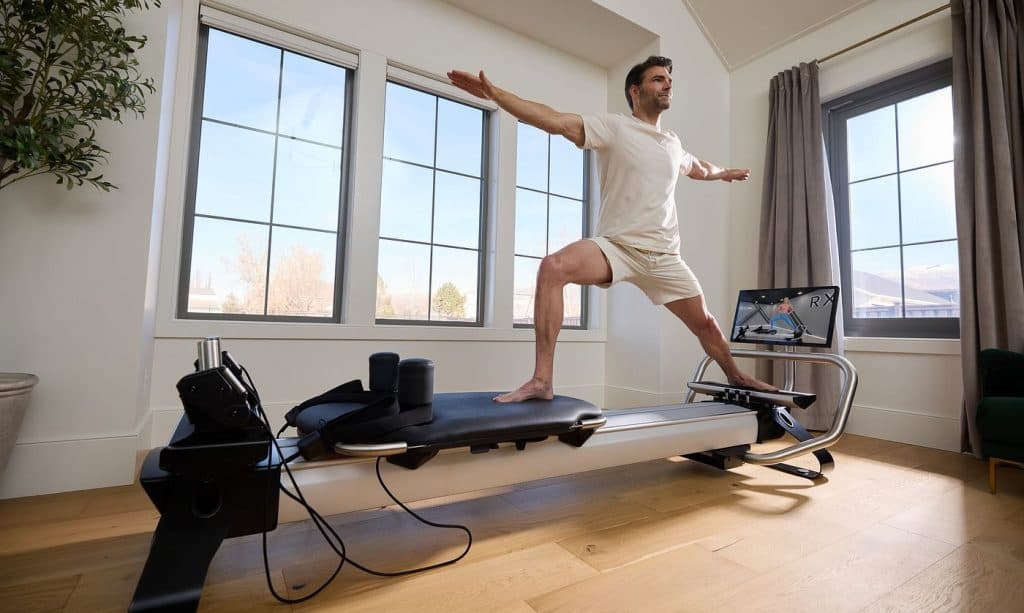
While reformer training has historically been studio-based, it's now possible to bring studio-grade Pilates reformer workouts into the home. The Ultra 1 Reformer is designed to deliver guided reformer-style training without requiring studio access, making reformer-based Pilates more accessible for people who prefer to train at home.
This creates a practical difference between the two methods: Pilates reformer training can now be practiced both in studios and at home, while Lagree, as described in current sources, remains centered on studio-based equipment and instruction.
Is Lagree Harder Than Pilates?
There are no peer-reviewed studies that compare:
Perceived difficulty
Effort level
Intensity between Lagree and Pilates
Because difficulty is subjective and program-dependent, research does not currently support ranking one method as “harder” than the other.
Lagree vs Pilates for Weight Loss
What Research Shows About Pilates
A 2021 meta-analysis found that Pilates programs were associated with reductions in body weight, BMI, and body fat percentage in adults with overweight or obesity, particularly in longer-duration interventions.² The same analysis found no significant change in lean body mass.²
What Research Shows About Lagree
Published Lagree studies have not evaluated weight loss or body composition outcomes.⁴
Because of this, there is no evidence-based comparison between Lagree and Pilates for weight loss.
Explore More
If you’re interested in mat-based strength workouts, iFIT offers guided programs that can be done without large equipment:
Pearl Fu’s Pilates Strength for Longevity series, featuring controlled, mat-based strength sessions
Jeni DelPozo’s Pilates Tone and Power series, focused on body-weight and mat-based training
For readers curious about reformer-style training, you can also explore the Ultra 1 Reformer, NordicTrack's Pilates reformer designed for guided reformer workouts.
FREQUENTLY ASKED QUESTIONS
References
Journal of Bodywork and Movement Therapies. The Pilates Method: History and Philosophy.
Frontiers in Physiology. Pilates for Overweight or Obesity: A Meta-Analysis.
Lagree Fitness. What Is Lagree Fitness?
International Journal of Exercise Science. A 6-Week Lagree Intervention Improves Dynamic Balance and Functional Movement Screen Performance.
Nursing & Healthcare International Journal. Neuroscience – Lagree Method – Manual Medicine Physical Exercise and Rehabilitation Applications.
Disclaimer: The primary purpose of this blog post is to inform and entertain. Nothing on the post constitutes or is intended to be a substitute for professional medical advice, prevention, diagnosis, or treatment. Reliance on any information provided on the blog is solely at your own risk. Always seek the advice of your physician or other qualified health provider with any questions you may have regarding a medical condition, and please consult your doctor or other health care provider before making any changes to your diet, sleep methods, daily activity, or fitness routine. Do not disregard professional medical advice or delay seeking it because of information available on this blog. NordicTrack assumes no responsibility for any personal injury or damage sustained by any recommendations, opinions, or advice given in this article. Always follow the safety precautions included in the owner’s manual of your fitness equipment.
RECENT ARTICLES
Fitness | Equipment
New Year, New Practice: Pilates Fitness Goals for Longevity
Start the year with sustainable Pilates fitness goals focused on strength, balance, and consistency, building a movement practice designed for long-term well-being.
Dec 26, 2025 · 7 min read
READ MORE
Fitness
Munich: The Performance Heart of Pilates 2.0
Explore how Munich shapes Pilates 2.0 through rhythm, flow, and performance precision, powered by the Ultra 1 Reform RX-S in high-energy reformer studios.
Dec 23, 2025 · 6 min read
READ MORE
Equipment
Milan: The Quiet, Luxury Expression of Pilates 2.0
Discover how Milan’s design culture shapes Pilates 2.0, where ritual, refinement, and the Ultra 1 Reform RX-S create a quiet luxury reformer experience at home.
Dec 17, 2025 · 6 min read
READ MORE