
GLP-1 and Adjusting Your Diet Correctly: Protecting Muscle and Metabolism
Using a GLP-1 medication? Learn how protein, strength training, hydration, and balanced nutrition help protect muscle and metabolism during weight loss.
Jan 16, 2026
·
11 min read

IN THIS ARTICLE
If you are using a GLP-1 medication, you may notice changes in appetite and how much you eat. Reduced food intake is common during weight loss. While this can support weight reduction, research shows that weight loss does not come only from fat.
Scientific American explains that when people lose weight, they lose both fat and muscle, not just stored fat.² This means that changes in eating patterns can influence not only how much weight is lost, but also the type of tissue lost during that process.
Muscle plays a distinct role in the body. Cleveland Clinic explains that muscle tissue is metabolically active, meaning it requires energy to maintain itself.¹ Harvard Health Publishing also notes that muscle burns more calories than fat and that total muscle mass is closely tied to resting metabolic rate.4
This guide outlines nutrition considerations that are commonly discussed in research related to weight loss, muscle mass, and metabolism. It focuses on how food intake, strength training, hydration, and recovery are described in established medical and scientific sources.
Why Nutrition Matters as Much as the GLP-1 Medication
Weight loss occurs when calorie intake is lower than the body’s energy needs. Cleveland Clinic defines this as a calorie deficit and notes that consuming fewer calories than the body burns can lead to weight loss.9
Scientific American reports that during weight loss, the body does not exclusively use fat tissue. Muscle tissue is also lost as body weight decreases.5 This pattern has been observed across different dieting approaches, from high-protein to low-carb, and is not limited to one specific method of weight loss.
Cleveland Clinic also explains that large or prolonged calorie deficits can reduce available energy and affect recovery, due to it being easier for the body to adjust to a smaller calorie deficit than a larger one.9 When appetite is lower and food intake decreases, the nutritional quality of meals becomes more important.
There are a few side effects that can happen with too big of a calorie deficit, as noted by Cleveland Clinic, such as:
Fatigue
Nausea
Dehydration
Constipation
Heachaches
Crabbiness
Nutrition influences how the body responds to weight loss. Eating patterns that include adequate protein, fluids, and regular meals are commonly discussed in clinical guidance related to muscle maintenance and physical function. The base line is, if too much of nutrition intake, particularly protein, is cut back, the body will break down muscle for fuel.9
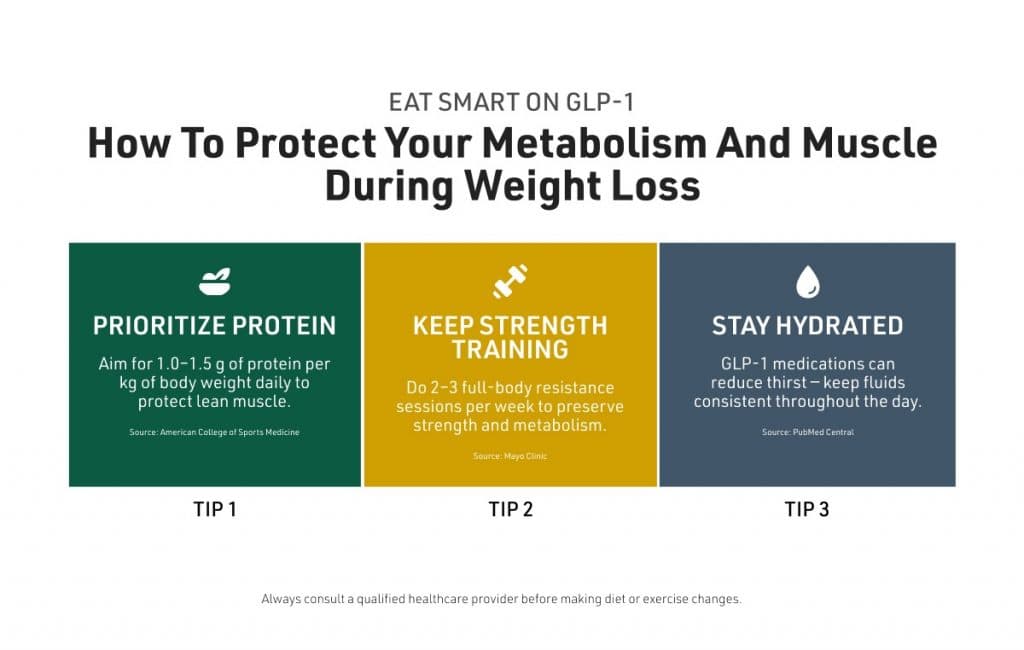
Prioritize Protein to Protect Lean Muscle
As shown by Cleveland Clinic, Protein is an essential part of the diet. Protein is one of the macronutrients discussed most often in relation to muscle tissue. That may lead to the question of what it does exactly for the body. Protein helps to:
Build, maintain, and repair muscle
Boost immunity
Support brain development and function
Build stronger bones
Deliver oxygen to tissues
And is an energy source.⁵ The American College of Sports Medicine recommends in grams of protein per kilogram of body weight per day:
1.2 – 2.0 g/kg for individuals who are routinely active
1.0 – 1.2 g/kg for healthy older adults
1.2 – 1.5 g/kg for older adults with acute or chronic disease
Up to 2 g/kg for older adults with severe illness/marked malnutrition
1.0 – 1.5 g/kg for middle-aged men and women⁵
This range helps maintain muscle mass, which is vital during periods of reduced calorie intake.
When protein intake is too low, the body is more likely to break down muscle to meet energy needs.² Spreading protein throughout the day can help maintain satiety and support muscle recovery.
Practical ways to include protein consistently:
Harvard Health deems foods that are particularly high in protein and high in quality as lean meats, such as chicken, beef, turkey, and pork. They also note that when possible, opt for lean or low-fat meat options, like lean ground beef, pork loin, or skinless chicken, and add in plant-based protein like nuts and beans. Eggs contain vitamins, minerals, healthy fats, and antioxidants, as well as all of the essential amino acids, making them a complete source of protein.11
Greek yogurt, eggs, or cottage cheese for breakfast
Chicken, turkey, fish, tofu, or legumes at lunch and dinner
Snacks like edamame, protein smoothies, or roasted chickpeas11
That’s not to say that protein is the only nutrient to be prioritized. Harvard Health stresses the importance of having a well-rounded diet that includes a balance of all three macronutrients for overall health: protein, carbohydrates, and fats. Additionally, if protein intake is increased without increasing physical activity, too many calories without expending enough could result in weight gain.11
This is why keeping strength training consistent through extreme weight loss is vital.
Keep Strength Training Consistent

Strength training is frequently discussed in relation to muscle mass. Mayo Clinic reports that strength training can help preserve and enhance muscle mass, develop strong bones, manage chronic conditions, sharpen your thinking skills, and improve the ability to perform everyday activities.² It also notes that two or three strength training sessions per week can lead to measurable improvements in strength.²
American Council on Exercise explains that compound exercises involve more muscle tissue, require more oxygen, and increase energy expenditure.8 These exercises can also improve intramuscular coordination around joints and provide a cardiovascular training benefit.
Examples of compound exercises described by ACE include:
Medicine Ball PNF Lift
Dumbbell Thrusters (squat to shoulder press)
Renegade Rows
Reverse Lunge to Balance With Biceps Curls
Transverse Lunge to Reach to Ground8
Mayo Clinic recommends selecting a resistance level that tires muscles after approximately 12 to 15 repetitions and gradually increasing resistance as strength improves.² This approach is presented as a general guideline rather than a requirement.
Mayo Clinic also notes that there should be a full day between strength sessions to allow your muscles to recover. To fill out the rest of your week, being active for short periods of time throughout each day can be beneficial.²
For more structure, explore Master Home Strength Training and What is the Best Incline To Walk on a Treadmill To Lose Weight? for low-impact routines that complement your nutrition plan.
Stay Hydrated and Nourished
Hydration and calorie intake are both discussed in clinical guidance related to recovery and fatigue. Cleveland Clinic notes that inadequate intake during a calorie deficit can contribute to fatigue and affect the body’s ability to recover.9
Hydration basics:
Increase intake on workout days
Add flavor with lemon, mint, or cucumber if plain water is unappealing
Use herbal tea or low-sugar electrolyte drinks to support hydration if needed⁴
Hydration helps regulate temperature, support digestion, and transport nutrients to working muscles.
Steady Nourishment Supports Energy
Small, nutrient-dense meals provide steady fuel when appetite is low. Cleveland Clinic explains that very low calorie intake can reduce available energy and slow recovery.⁸ Eating consistently helps maintain strength, focus, and metabolic health.
Watch for Common Nutrition Mistakes
Cleveland Clinic reports that eating too few calories for extended periods can reduce available energy and contribute to fatigue.⁸ Signs commonly discussed in relation to low intake include feeling tired, difficulty completing workouts, or slower recovery.
These signals are described as indicators that intake may not be meeting the body’s current needs. Adjusting meal frequency, portion size, or food choices is often discussed as a way to support energy and daily function.
None of these signs mean you are failing. They are simply signals that your body needs a little more support. If these appear, increasing protein, fluids, or overall calorie intake often helps restore energy.
Takeaway: Fueling Weight Loss with Awareness
Scientific American reports that weight loss includes the loss of both fat and muscle.6 Harvard Health Publishing explains that muscle mass is tied to resting metabolic rate and that muscle burns more calories than fat.4 Mayo Clinic notes that strength training helps preserve muscle mass and supports physical function.²
Together, these sources highlight why nutrition, strength training, and recovery are frequently discussed alongside weight loss strategies. Rather than focusing only on calorie reduction, established medical sources emphasize maintaining muscle, supporting recovery, and sustaining physical function during weight loss.
You deserve progress that feels strong, sustainable, and rooted in health.
FAQ: GLP-1 Nutrition
Why does muscle loss happen during weight loss?
Scientific American explains that when people lose weight, they lose both fat and muscle, not just fat.6
How often should strength training be done?
Mayo Clinic notes that two or three strength training sessions per week can lead to improvements in strength and muscle mass.²
How much protein should I eat every day?
The American College of Sports Medicine recommends 1.2–2.0 grams of protein per kilogram of body weight per day for individuals who are physically active or strength training.5 This intake supports muscle repair, strength, and healthy metabolism, especially important when appetite is reduced.
1.2 – 2.0 g/kg for individuals who are routinely active
1.0 – 1.5 g/kg for middle-aged men and women
1.0 – 1.2 g/kg for healthy older adults⁵
Why does muscle affect metabolism?
Cleveland Clinic notes that large calorie deficits can reduce available energy and affect recovery.9
References
Cleveland Clinic. The Difference Between Muscle Weight vs. Fat Weight.
Mayo Clinic. Strength training: Get stronger, leaner, healthier.
American Cancer Society. 5 Benefits of Strength Training
Harvard Health Publishing. Can you increase your metabolism?
American College of Sports Medicine (ACSM) The Emerging Science of Rehabilitative Nutrition: Protein’s Role as the Protagonist.
Scientific American. Why You Don’t Just Lose Fat When You’re on a Diet
USA Weightlifting. The Science Behind Weightlifting: How It Affects Your Body
American Council on Exercise (ACE). 5 Benefits of Compound Exercises.
Cleveland Clinic. Calorie Deficit: What to Know
Doherty, R., Madigan, S., Nevill, A., Warrington, G., & Ellis, J. The Sleep and Recovery Practices of Athletes. Nutrients, 2021.Nedeltcheva, A., Kilkus, J., Imperial, J., Schoeller, D., & Penev, P. (2010). Insufficient Sleep Undermines Dietary Efforts to Reduce Adiposity. Annals of Internal Medicine, 153, 435-441. https://doi.org/10.7326/0003-4819-153-7-201010050-00006
Harvard Health. High protein foods: The best protein sources to include in a healthy diet
Disclaimer: The primary purpose of this blog post is to inform and entertain. Nothing on the post constitutes or is intended to be a substitute for professional medical advice, prevention, diagnosis, or treatment. Reliance on any information provided on the blog is solely at your own risk. Always seek the advice of your physician or other qualified health provider with any questions you may have regarding a medical condition, and please consult your doctor or other health care provider before making any changes to your diet, sleep methods, daily activity, or fitness routine. Do not disregard professional medical advice or delay seeking it because of information available on this blog. NordicTrack assumes no responsibility for any personal injury or damage sustained by any recommendations, opinions, or advice given in this article. Always follow the safety precautions included in the owner’s manual of your fitness equipment.
RECENT ARTICLES
Fitness
GLP-1 and Strength Training: Avoiding a Common Pitfall
Losing weight on a GLP-1 medication? Learn why strength training is essential for protecting muscle, supporting metabolism, and building long-term results that last.
Jan 9, 2026 · 10 min read
READ MORE
Fitness
Move Through the Tired Days: How to Work Out When You’re Tired on GLP-1s
Feeling low energy while using GLP-1 medications? Learn how to adjust workouts, support recovery, and stay consistent with smart movement, hydration, and nutrition strategies.
Jan 20, 2026 · 9 min read
READ MORE
Fitness
GLP-1 and Strength Training: The Key to Lasting Weight Loss
Using a GLP-1 medication? Learn why strength training helps preserve muscle, support metabolism, and improve long-term weight maintenance during weight loss.
Jan 21, 2026 · 12 min read
READ MORE