
What to Look for When Buying a Commercial Pilates Reformer for Your Studio
Buying a commercial Pilates reformer is not a home purchase decision. Here is what actually matters for a studio floor: resistance range, frame durability, safety design, floor space, and service support.
Sep 2, 2026
·
11 min read

IN THIS ARTICLE
KEY TAKEAWAYS
- A commercial reformer is rated for 6 to 10 sessions per day. Using a home reformer at studio volume voids the warranty and accelerates wear — a common and costly mistake.
Resistance consistency across multiple units matters as much as total range. When every machine delivers the same load at the same spring setting, instructors can cue the room once.
Every reformer needs a minimum of 18 to 24 inches of clearance on all sides for safe instructor access. Plan for one machine per 14 to 20 square feet of studio floor space.
A reformer with an integrated screen expands what your studio can offer: iFIT-assisted classes where the instructor focuses entirely on client experience, and off-hours self-guided sessions as a revenue add-on.
Most boutique studios open with 4 to 8 reformers for group classes, with reformer count as the hard ceiling on class capacity.
A commercial reformer purchase is not like buying fitness equipment for a home. The machine you put on your studio floor will see six to ten sessions a day, carry clients of every size and ability level, and need to perform consistently for years. [1] Get it right and it anchors your programming. Get it wrong and you are replacing springs, fielding client complaints, and dealing with downtime that costs you bookings.
This guide walks through every criterion that matters for a studio purchase, from frame construction and resistance capacity to floor spacing and connected content, so you can make a decision you will not regret twelve months in.
Commercial vs. Home: Why the Distinction Matters
The term "commercial grade" points to specific engineering decisions, not marketing language. A commercial reformer is rated for daily high-volume use. A home reformer is rated for a few sessions a week. Run a home unit at studio volume and you wear out the carriage, springs, and frame far ahead of schedule. You also void the warranty entirely. [1]
The differences show up in three places:
Frame and structural integrity. Commercial frames use heavier-gauge materials and reinforced hardware designed for continuous loading. Home frames use lighter construction that is not rated for back-to-back daily use.
Weight capacity. Home reformers typically support between 250 and 300 lbs. Commercial studio models vary in their rated capacity — confirm the specific weight capacity of any machine you are evaluating against the actual user profile of your studio before purchasing. [3] That figure is a safety and insurance consideration, not a preference.
Warranty coverage. Commercial warranties explicitly cover studio use. Home warranties do not. Before purchasing any reformer for studio use, confirm in writing that the warranty applies to commercial operation. If it does not, the machine is not a commercial reformer regardless of how it is marketed.
The Seven Criteria That Matter for a Studio Purchase
Resistance Range and Precision
A studio reformer needs a resistance range wide enough to serve your full client population in the same group class. Beginners working on footwork and endurance need light spring loads. Advanced clients doing arm work and jumping need heavy tension. A narrow resistance range forces you to split client groups or compromise programming.
Look for a minimum of four distinct spring weights and at least 90 lbs of total resistance capacity. The Ultra 1 Reform RX-S offers 143 lbs of resistance across four springs with a Press-Lock system, allowing fast transitions between resistance levels without interrupting the session.
One practical note: resistance consistency across multiple units matters as much as the total range. When every machine in your studio delivers the same resistance at the same spring setting, your instructors can cue the room once. When units vary, every cue requires individual correction.
Frame and Carriage Durability
The carriage is what your clients lie on, sit on, and push against every session. It needs to glide silently, hold its alignment over time, and show no play or noise even after thousands of sessions.
Sealed bearing systems on commercial carriages maintain smooth, consistent movement under heavy continuous use. Plastic wheels on basic tracks, common on home reformers, develop audible noise and uneven resistance as they wear. On a studio floor, a squeaky carriage is a client experience problem.
Frame construction also determines how the machine ages. Stainless steel tracks and precision-engineered carriages hold their performance over a decade of commercial use with proper maintenance. Budget-grade components degrade within a year or two of studio volume.
Safety Design for Multi-User Environments
A studio floor is different from a home gym. Clients arrive at different fitness levels, some without prior reformer experience. They use the machine without supervision between classes. Equipment that creates unnecessary hazards in those conditions is a liability.
The most significant safety feature on a commercial reformer is the spring enclosure system. Exposed springs create pinch points and hazards during transitions, particularly in a group class where clients are moving without direct instructor oversight. The Ultra 1 Reform RX-S features an Enclosed-Spring Solid Spine design that is purpose-built for unattended use in exactly this kind of environment.
Footbar Adjustability and Setup Speed
Your instructors will reset every reformer on the floor between classes, often in under three minutes. Footbar adjustability determines how long that takes.
A footbar that requires tools to adjust is not appropriate for a studio. Neither is one with only two positions. For a class with 8 to 10 clients of different heights, you need quick position changes and enough settings to accommodate the full range of your client base. The Ultra 1 Reform RX-S has a traveling footbar with seven positions that adjusts without tools.
Screen and Connected Content
The most significant shift in commercial reformer equipment over the last few years is the integration of on-demand instructor content directly into the machine. A reformer with a built-in screen and a connected content library expands what your studio can offer without expanding your class schedule.
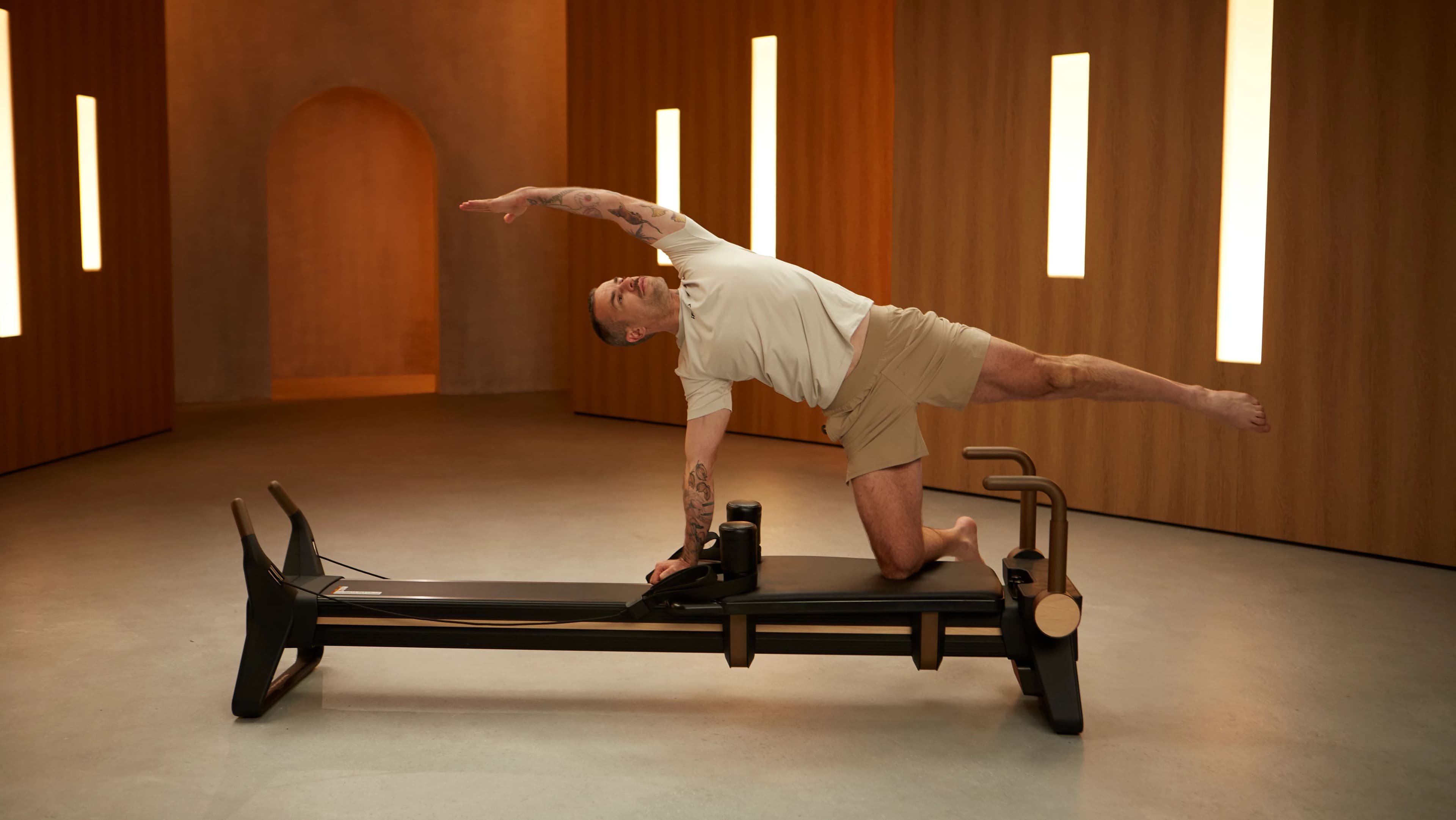
With the Ultra 1 Reform RX-S and an active Reformer Digital Activation, clients follow iFIT Pro sessions on the built-in 24" HD touchscreen, guided by certified instructors via Bluetooth headphones. The Smart Spine™ tracking system shows each client their cadence, watts, and resistance in real time. For studios running iFIT-assisted classes where a live instructor circulates for hands-on corrections, the screen handles cueing so the instructor can focus entirely on client experience. For studios offering off-hours self-guided sessions as a revenue add-on, the screen is what makes the format possible.
iFIT's reformer series span beginner through advanced programming. The Aligned Athlete with Jeni Delpozo is an intermediate-level series well-suited to clients who have completed foundational reformer work and are ready to build functional strength and movement precision.
Maintenance and Service Support
Commercial equipment needs commercial warranty terms and commercial service access. Before purchasing any reformer for studio use, get the following confirmed in writing.
Warranty: The Ultra 1 Reform RX-S carries separate warranty coverage for the frame, components, and tablet. Confirm the current warranty terms directly with NordicTrack's commercial team before purchasing, and get them in writing. Know what is and is not covered before the first client steps on the machine.
Parts availability: Replacement springs, cables, carriage wheels, and upholstery should be available directly from the manufacturer or through authorized service channels. Ask for typical lead times before purchasing. A machine that sits idle for two weeks waiting on a spring order costs you more than the part.
Service: NordicTrack's commercial service team provides dedicated support for commercial operators. Before committing to a multi-unit purchase, confirm that commercial service is available in your region and ask what the expected response time is for equipment down.
Proprietary components: Some manufacturers build reformers with proprietary parts that are only available through one channel at non-negotiable prices. Understand what you are committing to before signing.
Floor Space and Configuration
Each reformer requires a clearance of at least 18 to 24 inches on all sides for safe instructor access. [2] That is the absolute minimum. Most studios plan for more to give instructors comfortable working room during corrections.
The standard planning formula is one reformer per 14 to 20 square feet of studio floor space, accounting for clearance on all sides. [4] For a studio with 800 square feet of reformer floor, that supports 8 to 10 machines comfortably.
Most boutique studios open with 4 to 8 reformers for group classes. [4] A studio running semi-private sessions can operate profitably with as few as 4. A studio built around group classes of 8 to 10 clients needs at least that many machines to run a full class without turning anyone away.
| Studio Size | Reformers | Floor Space Needed |
|---|---|---|
Boutique semi-private | 2–4 | 400–600 sq ft |
Boutique group class | 6–8 | 700–1,000 sq ft |
Mid-size group + private | 10–12 | 1,200–1,500 sq ft |
.jpg&w=3840&q=75)
What Studio-Grade Actually Means for Surface Materials
One specification that rarely appears in reformer marketing but matters operationally is upholstery material. Antimicrobial commercial-grade vinyl is a hygiene requirement for studio environments, not a preference. Standard vinyl absorbs sweat and harbors bacteria across back-to-back sessions. Commercial-grade antimicrobial material supports proper sanitation protocols and protects the surface over years of daily use.
The Ultra 1 Reform RX-S uses Grade 5 antimicrobial vinyl carriage material, rated for high-traffic commercial use.
How to Think About Total Cost of Ownership
The purchase price is the easiest number to compare. It is also the least useful one for evaluating a commercial reformer.
A cheaper reformer without a commercial warranty can cost more to own over time if it needs early service or lacks manufacturer-backed parts support. [1] Commercial reformers from dedicated manufacturers cost between $3,000 and $6,000 per unit for traditional models without integrated screens. [2] The Ultra 1 Reform RX-S sits above that range as a connected commercial reformer, with the screen, iFIT Pro library, and Smart Spine™ tracking built into the machine rather than purchased separately or offered only as an add-on on many traditional models. For studios that plan to run iFIT-assisted classes or off-hours self-guided sessions, the connected layer is part of the equipment cost rather than an added expense on top of it.
The questions worth asking are: what does this machine cost per session over five years, what does downtime cost when it needs service, and what does the connected content add to your revenue capability? How quickly the machines recover their cost depends on your class pricing, schedule, and utilisation rate. For a studio running 8 reformers at optimal class occupancy of 75% to 85%, [2] the path to recovery is largely a function of how consistently those slots are filled.
Questions to Ask Before Signing a Purchase Order
Before committing to any commercial reformer purchase, get clear answers on these:
Warranty terms in writing: Frame, components, and tablet covered separately. Confirm the warranty explicitly covers commercial use. Verbal assurances are not enough.
Parts availability: Are replacement springs, cables, carriage wheels, and upholstery available through the manufacturer or authorized channels? What is the typical lead time for common wear items?
Service coverage: Does commercial service cover your region? What is the expected response time when a machine goes down mid-schedule?
Delivery and installation: Does the purchase include delivery coordination and assembly? For multi-unit studio orders, is there a commissioning process?
Multi-unit pricing: Is volume pricing available for full studio floor orders? For accessories like boxes, mats, and jump boards?
Explore More
FREQUENTLY ASKED QUESTIONS
References
Peak Primal Wellness. Pilates Reformer Buying Guide: Everything You Need to Know
Disclaimer: The primary purpose of this blog post is to inform and entertain. Nothing on the post constitutes or is intended to be a substitute for professional medical advice, prevention, diagnosis, or treatment. Reliance on any information provided on the blog is solely at your own risk. Always seek the advice of your physician or other qualified health provider with any questions you may have regarding a medical condition, and please consult your doctor or other health care provider before making any changes to your diet, sleep methods, daily activity, or fitness routine. Do not disregard professional medical advice or delay seeking it because of information available on this blog. NordicTrack assumes no responsibility for any personal injury or damage sustained by any recommendations, opinions, or advice given in this article. Always follow the safety precautions included in the owner's manual of your fitness equipment.
RECENT ARTICLES
iFIT App | Equipment
How to Make Your Pilates Studio More Profitable Without Adding More Staff
Your reformers sit idle between classes. Here is how boutique studio owners are turning off-hours floor time into a new revenue stream without adding staff or instructor hours.
Aug 5, 2026 · 14 min read
READ MORE-Feb_25-146.jpg&w=3840&q=75)
Equipment
Why Commercial Gyms Are Adding Pilates Reformers (And What It Means for Your Facility)
Boutique Pilates members spend $200 to $260 a month, compared to $30 to $50 at a high-volume gym. See why Crunch and 24 Hour Fitness are adding reformers to capture that revenue.
Aug 21, 2026 · 8 min read
READ MORE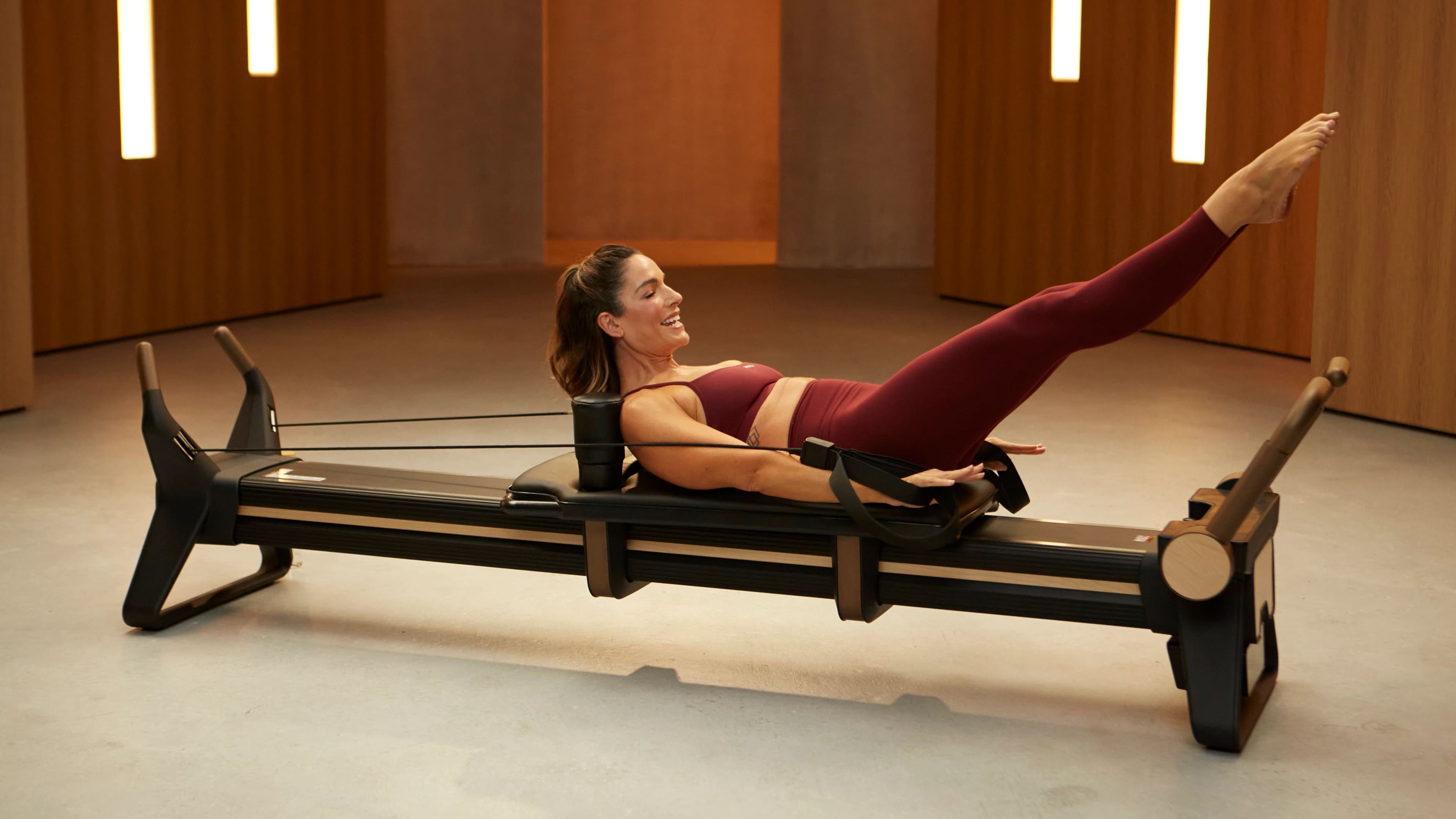
Equipment | iFIT App
How to Offer Reformer Pilates at Your Gym Without Hiring a Dedicated Instructor
You do not need a certified Pilates instructor to run reformer sessions at your gym. See the staffing model, the equipment list, and the full 90-day launch plan.
Aug 31, 2026 · 10 min read
READ MORE