
5K Training at Home: Treadmill Plans for Every Level
Five treadmill-specific 5K training plans built for every fitness level. Choose your program, follow the week-by-week structure, and reach race day ready with confidence.
Apr 28, 2026
·
9 min read

IN THIS ARTICLE
KEY TAKEAWAYS
- Five structured 5K treadmill training plans are available ranging from 4 weeks to 12 weeks, matched to your current fitness level from true beginner to advanced runner
- Treadmill training for a 5K gives you precise control over pace, incline, and timing, making it easier to track progress and stay consistent than outdoor running alone
- Running at a 1 to 2 percent incline compensates for belt assistance and more closely replicates outdoor effort across all training plans
- iFIT guided series including the Redwoods Walk to Run Series and the UK 5K Progressive Speed Series align directly with the training progressions outlined in this guide
- If you can run 30 minutes continuously at a manageable pace, you are ready to race a 5K
Training for a 5K at home gives you control over your schedule and environment.
On a treadmill, you can manage every variable: pace, incline, temperature, and timing. There are no weather issues, traffic concerns, or safety questions about early-morning runs—just you, the machine, and a plan to follow.
Many runners who quit before race day don’t lack motivation; they lack structure. They run until it feels hard, repeat the same workout a few times, and stop around week two because they don’t know what’s next. This guide solves that problem.
Below are five treadmill-specific 5K training plans: 4-week, 6-week, 8-week, 10-week, and 12-week options. Each workout gives you clear speed ranges and incline settings to enter. This is structured for treadmill use.
Choose the plan that fits your current ability and start today.
Why the Treadmill is Your Best 5K Training Tool
Outdoor running has its benefits, but for structured training, the treadmill gives clearer control.
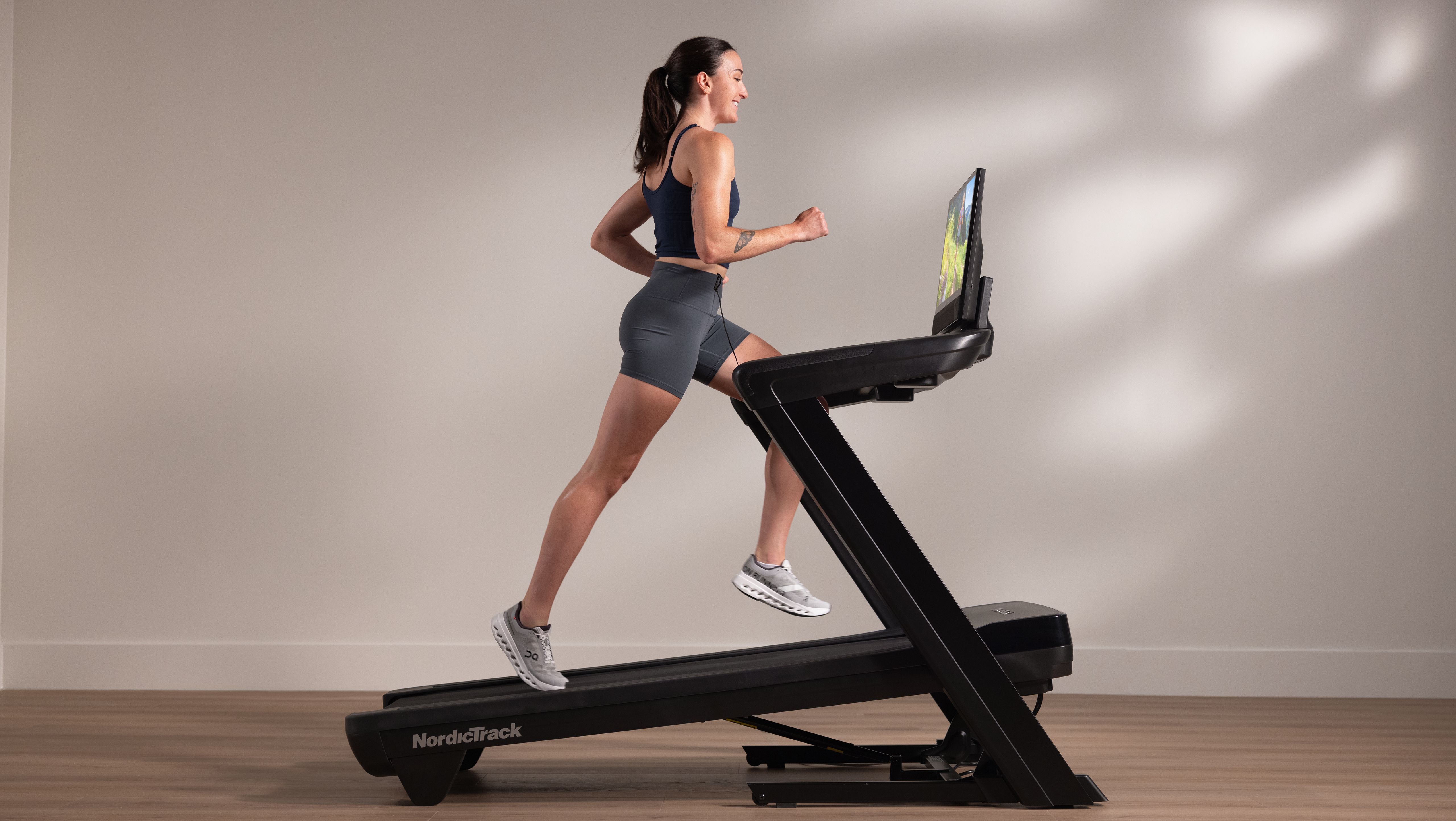
Set a speed and it stays steady. Set an incline and it holds. That consistency makes it easier to target effort levels and track improvement. For racers, having measurable, repeatable data matters more than estimating pace on uneven routes.
Beginners gain immediate feedback from the console, which shows when they are holding an easy pace or going too fast. That precision prevents the common mistake of overtraining or undertraining early on.
Incline matters too. The treadmill belt slightly assists leg turnover compared to outdoor terrain. Running at a 1–2% incline compensates for that difference and creates a closer match to outdoor effort. Use that as your default unless otherwise specified.
Having a treadmill nearby also removes obstacles. You can train regardless of weather, partners, or gym hours. All you need is a plan and the will to follow it.
How to Choose the Right Training Plan for Your Fitness Level
Before picking a plan, be honest about your current ability.
Use the checklist below:
Can you walk briskly for 30 minutes? Choose the 12-week plan.
Can you jog for a few minutes before walking? Use the 10-week plan.
Can you jog 10–15 minutes without stopping? Try the 8-week plan.
Do you already run 20 minutes or more? Start with the 6-week plan.
Are you running regularly and want to improve speed? Go with the 4-week plan.
If unsure, start with the longer program. Gradual buildup helps reduce the risk of injury and burnout.³
Common rules across plans: aim for three run days per week.³ This schedule supports progress and recovery over time.
You can add light cross-training or strength work on off days. Avoid missing two straight run days. Unless told otherwise, set a 1% incline.

Treadmill-Specific 5K Training Plans: Week-By-Week Breakdowns
These treadmill training plans are built using widely accepted endurance training principles, including gradual progression, interval-based conditioning, and consistent weekly training frequency.¹
Effort guide:2
Easy: You can speak in full sentences.
Moderate/tempo: Short phrases only.
Hard/interval: Breathing heavy; no conversation possible.
12-Week Plan: True Beginner
Goal: Complete a 5K without stopping.
Default: 1% incline. Walk: 3.0–3.5 mph. Jog: 4.5–5.0 mph.Run three days per week.
Week | Workout |
1 | 5-min walk → 8 × (1 min jog / 2 min walk) → 5-min walk |
2 | 5-min walk → 8 × (1.5 min jog / 2 min walk) → 5-min walk |
3 | 5-min walk → 7 × (2 min jog / 2 min walk) → 5-min walk |
4 | 5-min walk → 6 × (2.5 min jog / 2 min walk) → 5-min walk |
5 | 5-min walk → 5 × (3 min jog / 2 min walk) → 5-min walk |
6 | 5-min walk → 5 × (4 min jog / 2 min walk) → 5-min walk |
7 | 5-min walk → 4 × (5 min jog / 2 min walk) → 5-min walk |
8 | 5-min walk → 3 × (7 min jog / 2 min walk) → 5-min walk |
9 | 5-min walk → 2 × (10 min jog / 2 min walk) → 5-min walk |
10 | 5-min walk → 22 min jog → 5-min walk |
11 | 5-min walk → 25 min jog → 5-min walk |
12 | 5-min walk → 30 min jog → 5-min walk. Run an easy 20-min two days before the race; rest one day before. |
10-Week Plan: Beginner
Goal: Run a 5K continuously.
Default: 1% incline. Walk: 3.0–3.5 mph. Jog: 5.0–5.5 mph.Run three days per week.
Week | Workout |
1 | 5-min walk → 6 × (2 min jog / 2 min walk) → 5-min walk |
2 | 5-min walk → 5 × (3 min jog / 2 min walk) → 5-min walk |
3 | 5-min walk → 4 × (4 min jog / 2 min walk) → 5-min walk |
4 | 5-min walk → 3 × (5 min jog / 2 min walk) → 5-min walk |
5 | 5-min walk → 2 × (8 min jog / 2 min walk) → 5-min walk |
6 | 5-min walk → 20 min jog → 5-min walk |
7 | 5-min walk → 22 min jog → 5-min walk |
8 | 5-min walk → 25 min jog → 5-min walk |
9 | 5-min walk → 28 min jog → 5-min walk |
10 | 5-min walk → 30 min jog → 5-min walk. Race simulation. |
8-Week Plan: Beginner–Intermediate
Goal: Run a steady 5K with consistent effort.
Default: 1% incline. Easy: 5.0–5.5 mph. Moderate: 5.5–6.0 mph.Run three days per week.
Week | Day 1 | Day 2 | Day 3 |
1 | 20 min easy | 4 × (3 min moderate / 2 min easy) | 25 min easy |
2 | 22 min easy | 4 × (4 min moderate / 2 min easy) | 27 min easy |
3 | 20 min easy | 5 × (3 min moderate / 2 min easy) | 30 min easy |
4 | 20 min easy | 20 min easy | 20 min easy |
5 | 25 min easy | 5 × (4 min moderate / 2 min easy) | 32 min easy |
6 | 25 min easy | 6 × (3 min moderate / 2 min easy) | 35 min easy |
7 | 20 min easy | 4 × (4 min moderate / 2 min easy) | 30 min easy |
8 | Race simulation: 5K at goal pace. Easy 20-min jog two days before race. |
6-Week Plan: Intermediate
Goal: Improve race performance and build tempo fitness.
Default: 1–2% incline. Easy: 5.5–6.0 mph. Tempo: 6.0–6.8 mph.Run three to four days per week.
Week | Day 1 | Day 2 | Day 3 |
1 | 25 min easy | 3 × (5 min tempo / 3 min easy) | 30 min easy |
2 | 25 min easy | 4 × (5 min tempo / 2 min easy) | 33 min easy |
3 | 20 min easy | 3 × (5 min tempo / 3 min easy) | 35 min easy |
4 | 25 min easy | 4 × (6 min tempo / 2 min easy) | 38 min easy |
5 | 20 min easy | 3 × (5 min tempo / 2 min easy) | 30 min easy |
6 | Race simulation: 5K at goal pace. Easy 20-min jog two days before. Rest the day before the race. |
4-Week Plan: Advanced
Goal: Sharpen race speed.
Default: 1–2% incline. Easy: 6.0–6.5 mph. Tempo: 6.8–7.5 mph. Interval: 7.5–8.5 mph.Run four days per week.
Week | Day 1 | Day 2 | Day 3 | Day 4 |
1 | 30 min easy | 6 × (1 min interval / 2 min easy) | Rest | 4 × (5 min tempo / 2 min easy) |
2 | 30 min easy | 8 × (1 min interval / 90 sec easy) | Rest | 5 × (5 min tempo / 2 min easy) |
3 | 25 min easy | 6 × (1 min interval / 2 min easy) | Rest | 3 × (5 min tempo / 2 min easy) |
4 | 20 min easy | Rest | 15 min easy | Race day |
Understanding Pace Zones and How To Use Them on a Treadmill
One benefit of treadmill training is that pace zones are exact numbers you can maintain.
Easy pace allows full sentences, usually 4.5–5.5 mph for beginners and 5.5–6.5 mph for intermediates. Most of your running should happen here to build aerobic endurance.
Tempo pace is 1.0–1.5 mph faster than easy pace and feels "comfortably hard." It trains sustained speed.
Interval pace is near maximum effort, using short bursts of speed and full recovery. It develops top-end speed.
Treadmill speed | Pace per mile | Approximate 5K time |
4.5 mph | 13:20/mile | ~41 minutes |
5.0 mph | 12:00/mile | ~37 minutes |
5.5 mph | 10:54/mile | ~34 minutes |
6.0 mph | 10:00/mile | ~31 minutes |
6.5 mph | 9:14/mile | ~28:40 |
7.0 mph | 8:34/mile | ~26:40 |
7.5 mph | 8:00/mile | ~24:50 |
Use these as reference points, not strict goals. Adjust based on how you feel and where your fitness stands.
If you prefer training by feel, judge by effort: easy feels natural, tempo feels controlled but demanding, and interval feels like your limit. Heart rate training adds more precision if your treadmill supports it. NordicTrack’s iFIT ActivePulse can use heart rate feedback to adjust intensity automatically, with a compatible monitor and membership.
For more on training intensity, see VO2 max and how to improve it.
Warm-Up and Cool-Down Protocols For Treadmill Running
A proper warm-up prepares your body to run and reduces injury risk. Cooling down helps recovery and prevents dizziness.
Warm-up (5–7 minutes):
2 minutes at 2.5–3.0 mph, 0% incline (walk)
2 minutes at 3.0–3.5 mph, 1% incline (brisk walk)
1–2 minutes at 4.0–4.5 mph, 1% incline (light jog)
1 minute at easy-run pace, 1% incline
Cool-down (5 minutes):
2 minutes at 4.0–4.5 mph, 0% incline (slow jog)
3 minutes at 3.0–3.5 mph, 0% incline (walk)
Afterward, stretch for 5–10 minutes, focusing on calves, quads, hamstrings, and hips to maintain flexibility through the training block.
For more on form and technique, read the NordicTrack Runner’s Academy.
How iFIT's Guided 5K Programs Align With Your Training
The plans above give structure; iFIT adds coaching.

iFIT’s guided 5K programs follow the same progression: scheduled intervals, gradual increases in duration, and pace cues through each session. A trainer guides you step by step, calling out pacing and form cues in real time.
For runners who struggle to stay consistent, real-time coaching helps. For those who want more customized effort progression, iFIT’s SmartAdjust feature tailors intensity automatically on supported NordicTrack equipment.
iFIT doesn’t remove the effort required—it removes uncertainty around how to train and when to adjust. That helps with consistency deep into a training cycle.
Most NordicTrack machines require an active iFIT membership, and SmartAdjust or ActivePulse need compatible hardware.
See iFIT membership vs personal training for a detailed comparison, and why personalized training programs improve results for further reading.
New iFIT Series That Support 5K Training
iFIT’s 5K training experience isn’t built around a single program—it’s a progression of guided series that match exactly how your training evolves.
Here are the most relevant iFIT series to support your 5K journey right now:
1. Start with a Walk-to-Run Foundation
If you're beginning from zero or rebuilding consistency, the Redwoods Walk to Run Series with Tommy Rivs is one of the most effective starting points.
These workouts follow the same structure as the 10–12 week plans above—alternating walking and jogging while gradually increasing your running time. Rivs provides real-time cues on pacing, breathing, and form, helping you stay consistent without overthinking each session.
Start your 5K journey with the Redwoods Walk to Run Series.
2. Follow a Structured 5K Progression Plan
For runners ready to train with purpose, the UK 5K Progressive Speed Series with Kori Sampson is the closest match to a full 5K training plan inside iFIT.
This series includes endurance runs, interval sessions, incline efforts, and recovery workouts—mirroring the exact progression outlined in this guide. Instead of manually adjusting speed and incline, your treadmill can follow the trainer automatically on compatible NordicTrack models.
Follow the UK 5K Progressive Speed Series for a step-by-step training path.
3. Build Endurance and Stay Consistent
Once you can run continuously, consistency becomes the priority. The Joy of Running Part 3: Oregon Series with Tommy Rivs helps extend your endurance through a mix of “foundation” and “growth” workouts.
These sessions are ideal for building toward a full 5K distance while keeping training engaging with varied terrain and pacing.
Build your base with the Joy of Running: Oregon Series.
4. Experience Real 5K Race Conditions
As race day approaches, practicing pacing and effort matters. The 2025 Chicago Marathon 5K POV Series lets you run full 5K segments from a real race course.
These immersive runs help you rehearse race-day effort, visualize the course, and practice finishing strong—especially on larger screens where the experience feels more lifelike.
Try a race simulation with the Chicago Marathon 5K POV Series.

Bringing It All Together on Your Treadmill
What makes these series different is how they connect directly to your equipment.
On NordicTrack treadmills like the Commercial 2450 or X24, iFIT workouts can automatically adjust your speed and incline to match the trainer’s cues. That means you’re not guessing when to push or recover—you stay focused on running while the machine handles the transitions.
That level of structure is what helps many runners stay consistent long enough to actually reach race day.
Race-Day Simulation: How to Prepare For Your 5K on a Treadmill
One to two weeks before your race, run a full 5K simulation on the treadmill under race-like conditions.
The goal is practice, not a personal record—rehearse pacing and mindset to ensure readiness.
Steps:
Complete your warm-up.
Set incline at 1–2%.
Start at an easy-to-moderate pace for the first mile.
Increase slightly through the middle section if you feel steady.
Run hard for the final half-mile, simulating the race finish.
Cool down and stretch afterward.
If your actual race is outdoors, include one or two outdoor runs in the final week. The movement pattern differs slightly, and this transition keeps your body ready.
For more about building race endurance, see your first 30-minute tempo run.
Your Next Step: From Plan to Finish Line
If you want a plan you can follow step by step, iFIT’s guided 5K series bring structure, coaching, and progression together in one place.
Pair that with a NordicTrack treadmill like the Commercial 2450 or X24, and your training becomes automatic, consistent, and easier to stick with.
Shop Smart Treadmills and start your 5K training today.
Further reading:
The plan is ready. So are you.
FREQUENTLY ASKED QUESTIONS
References
American Council on Exercise. Training to Run Your First 5K.
Mayo Clinic. 5K run: 7-week training schedule for beginners.
Marathon Handbook. 3 Week 5K Training Plan: Schedule + The 21-Day Physiology
Disclaimer: The primary purpose of this blog post is to inform and entertain. Nothing on the post constitutes or is intended to be a substitute for professional medical advice, prevention, diagnosis, or treatment. Reliance on any information provided on the blog is solely at your own risk. Always seek the advice of your physician or other qualified health provider with any questions you may have regarding a medical condition, and please consult your doctor or other health care provider before making any changes to your diet, sleep methods, daily activity, or fitness routine. Do not disregard professional medical advice or delay seeking it because of information available on this blog. NordicTrack assumes no responsibility for any personal injury or damage sustained by any recommendations, opinions, or advice given in this article. Always follow the safety precautions included in the owner’s manual of your fitness equipment.
RECENT ARTICLES
Fitness | Workouts
Treadmill Training Plan: Conquer Your Fastest 5K with AI Coach
Build speed, endurance, and consistency with an AI-powered treadmill training plan designed to help you train for a 5K and hit your personal best from home.
Sep 16, 2025 · 6 min read
READ MORE
Fitness
VO₂ Max Explained and How to Improve It
Discover what VO₂ max means, why it matters for your fitness, and how structured training with NordicTrack and iFIT can help you improve it over time.
Mar 23, 2026 · 4 min read
READ MORE
Fitness
Runner's Academy: The Do's And Don'ts Of Running
Sep 26, 2016 · 7 min read
READ MORE